
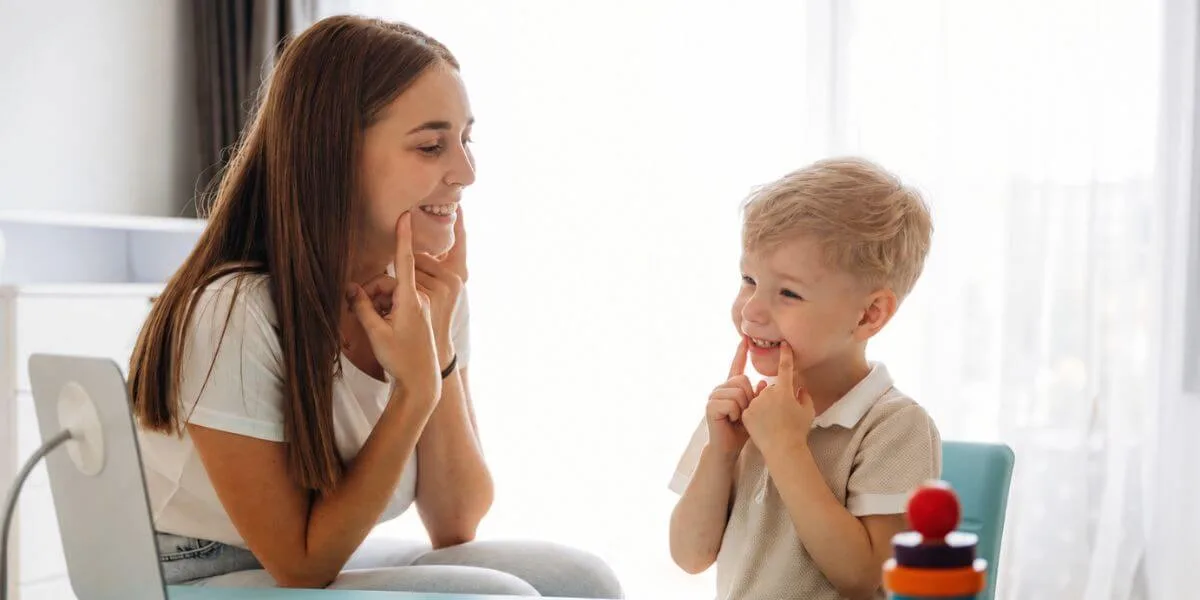
From your baby’s first babbles to the moment they start putting sentences together, watching their communication skills develop can be an exciting part of the early years. As a parent, there are lots of simple things you can do at home to encourage child speech development and give your little one plenty of opportunities to listen, communicate, and learn new words.
Every child’s journey is different. Some children begin talking earlier than others, while some take a little more time to find their voice. However, understanding typical child speech development milestones can give you an idea of what to expect while helping you recognise when your child might benefit from some additional support.
In this blog, we’ll explore child speech and language development in more detail, along with some common reasons why speech may be delayed, and we share five simple ways you can encourage your child’s communication skills as part of everyday family life.
What is child speech development?
Child speech development describes the process through which children learn to communicate using sounds, words, and eventually sentences. It begins long before a child says their first recognisable word.
Babies initially communicate through crying, facial expressions, eye contact, sounds, and gestures. Babbling then helps them experiment with different sounds, while listening to the people around them gradually helps them connect words with objects, people, actions, and feelings.
It’s also useful to understand that speech and language are closely connected but slightly different. Speech refers to the sounds and words a child produces, while language includes their ability to understand words, build vocabulary, form sentences, and communicate ideas.
As child speech and language development progresses, children gradually learn to listen, understand instructions, ask questions, take turns in conversations, and use language to communicate their needs and experiences.
Parents and caregivers have an important role to play in this development. Children learn a huge amount simply by listening and interacting with the people around them, meaning everyday conversations, stories, songs, and play all provide valuable learning opportunities.
What are the recommended child speech development milestones?
When considering child speech development milestones, it’s important to remember that they’re a guide rather than a strict timetable. Children develop at different rates, and there can be plenty of variation in when individual skills appear.
However, understanding some of the typical stages can help parents keep track of how their child’s communication is progressing.
According to Speech and Language UK, some typical child speech development milestones can include:
- By around 12 months – babies will often be babbling strings of sounds and using noises, pointing, and eye contact to attract attention. They may recognise familiar words and begin saying one or two recognisable words. Babies also start enjoying the back-and-forth nature of communications, responding with sounds when an adult speaks to them.
- Between 12 and 18 months – vocabulary usually begins to develop further. Children may understand considerably more words than they can actually say, follow some simple instructions, and begin using single words to ask for or identify familiar things.
- By around 2 years old – many children are using a growing collection of recognisable words and beginning to put two or three words together, such as “more juice” or “mummy come”. They will also usually understand simple questions and instructions and may begin asking their own basic questions.
- Between 2 and 3 years old – toddler speech development can progress quickly. Children often start forming longer sentences, asking lots of questions, and using words to describe actions as well as objects. Their speech may still contain pronunciation mistakes, but people who know them well can usually understand much of what they’re saying.
- Between 3 and 5 years old – children’s conversations generally become longer and more detailed. They begin talking about things that happened in the past or will happen in the future, telling simple stories, and expressing more complex thoughts and feelings. Their speech also becomes increasingly clear to people outside their immediate family.
There’s a broad range of typical development, so try not to compare your child’s progress too closely with other children of the same age. If you’re concerned that your child isn’t reaching expected communication milestones or has lost skills they previously had, speak to your health visitor, GP, or another appropriate healthcare professional for advice.
Common causes of delayed speech
There are many reasons why child speech development may progress more slowly, and a delay doesn’t necessarily mean that something is wrong. Some children are simply later talkers and develop their communication skills at their own pace.
Some common causes of delayed speech may include:
- Hearing difficulties – this can affect speech development because children learn to reproduce language by hearing the sounds and words around them. Temporary problems, such as glue ear, can also make it difficult to hear speech clearly.
- Speech and language difficulties – this often occurs alongside developmental differences or additional needs. In other cases, a child may understand language well but find producing particular speech sounds or forming words more difficult.
- The environment – certain environmental settings can influence opportunities for communication. Regular face-to-face interaction gives children opportunities to hear language, practise sounds, and respond to other people.
- Dual language learning – growing up with more than one language doesn’t cause a speech or language disorder. Children in multilingual families may distribute their vocabulary across their languages, and parents should feel comfortable communicating with their child using the languages that come naturally at home.
If you have concerns about delayed toddler speech development, it’s better to ask for advice than to simply wait and worry. Your health visitor, GP, or a speech and language therapist can help assess your child’s individual development and recommend appropriate next steps.
How to encourage child speech development at home
Supporting child speech and language development doesn’t require formal lessons or specialist equipment. Some of the best opportunities for learning happen naturally while you’re getting dressed, eating breakfast, playing, travelling, or getting ready for bed.
The key is to make communication enjoyable and give your child plenty of opportunities to listen and respond without putting them under pressure.
Here are five of our top tips for encouraging child speech development at home:
Talk little and often throughout the day
One of the simplest ways to encourage child speech development is to talk about what you’re doing together.
For example, while getting dressed, you could say, “blue socks on” or “let’s find your shoes.” During lunch, you can name foods, colours, and actions such as “cut”, “pour”, and “drink”. When you’re outside, talk about the cars, animals, trees, or people you can see.
Try to keep sentences appropriate for your child’s current level of understanding. You can also expand on what they say. If your toddler says “big dog”, for example, you might respond with “yes, that’s a big brown dog!”
This introduces new vocabulary without correcting or putting pressure on your child.
Build vocabulary through play
Play creates lots of natural opportunities for toddler speech development because children are often most receptive to new words when they’re interested in what they’re doing.
For example, if your child loves toy cars, you can introduce words such as “fast”, “slow”, “stop”, “go”, “wheel”, and “garage”. Building blocks provide opportunities to explore words such as “big”, “small”, “tall”, “up”, and “down”.
Rather than constantly asking your child questions such as “what’s this?”, try commenting on their play instead. Saying “wow, the red car is going really fast!” gives them useful language without making the interaction feel like a test.
Following your child’s interests can make learning new words feel like a natural part of play.
Sing songs and use nursery rhymes
Songs and nursery rhymes combine repetition, rhythm, actions, and language, making them an enjoyable way to support child speech and language development.
Familiar songs such as Twinkle, Twinkle, Little Star or The Wheels on the Bus allow children to hear the same words and sounds repeatedly. Actions can also help children connect words with their meanings.
Once your child knows a song well, try pausing before a familiar word to give them an opportunity to fill in the gap. Don’t worry if they don’t respond straight away. Simply continue the song and try again another time.
Most importantly, keep it fun. Singing together should feel like shared play rather than a speech exercise.
Reduce background noise when talking
Young children are still developing their listening and attention skills, so competing sounds can make it harder to concentrate on what you’re saying.
When you’re playing or having a conversation together, consider switching off the television or turning down the music for a while. Getting down to your child’s level and speaking face-to-face can also make it easier for them to see your facial expressions and mouth movements while listening to your words.
You don’t need a completely silent house. Instead, creating small periods of quieter, focused interaction throughout the day can give your child more opportunities to concentrate on communication.
Remember to give them time to respond too. A short pause after you speak gives your child time to process what they’ve heard and decide how they want to answer.
Offer simple choices to encourage words
Giving your child choices is another easy way to encourage communication without placing too much pressure on them.
Instead of asking “would you like a drink?”, try offering two clear options like “milk or water?” You can also show them both choices while saying the words.
Other everyday examples might include:
- “Apple or banana?”
- “Red top or blue top?”
- “Teddy or dinosaur?”
- “Book or puzzle?”
Your child might initially point rather than speak, and that’s okay. You can respond by modelling the word for them, for example: “banana! You’d like the banana.”
As their confidence and vocabulary develop, they may begin attempting the word themselves. These small interactions provide valuable opportunities to practise communication while also giving toddlers a sense of independence and choice.
Find out how we encourage your child’s speech and language development
Child speech development happens gradually through conversations, play, stories, songs, and everyday interactions. By following our above tips, you can create lots of opportunities for their communication skills to grow.
At Stepping Stones, communication forms an important part of children’s everyday learning. Through play, stories, songs, conversations, and interaction with other children, our caring early years team creates opportunities for children to develop their speech, language, listening, and social skills in a welcoming environment.
If you’re looking for a nurturing nursery where your child can learn, communicate, and grow in confidence, book a visit to our day nursery today. Come and meet our team, explore our facilities, and find out how we can support your child’s development throughout their early years.
Child speech development FAQs
At what age should a child start talking?
Many children begin saying their first recognisable words at around 12 months, although child speech development varies considerably. Before first words appear, babies develop important communication skills through babbling, gestures, eye contact, and responding to familiar voices. By around 18 months, many children are using a growing number of single words and understanding considerably more than they can say.
How can I encourage my toddler to talk more?
You can support toddler speech development by creating lots of opportunities for conversation through everyday life. Talk about what you’re doing, name objects during play, share books, sing nursery rhymes, and give your child plenty of time to respond. Following their interests and adding words to what they already say can also help naturally build their vocabulary.
Is it normal for a toddler to understand words but not say them?
Yes. Children commonly understand more words than they’re able to say, particularly during the earlier stages of toddler speech development. For example, a child might understand the name of an object and point towards it before they’re able to say the word themselves. Receptive language, which is the ability to understand language, and expressive language, which is the ability to communicate it, can develop at different rates.
Should I correct my toddler when they pronounce a word incorrectly?
You don’t usually need to repeatedly correct your child or ask them to say a word again. Instead, model the correct pronunciation naturally within your response. For example, if your toddler says “tat” for “cat”, you could respond with, “yes, it’s a cat!” Young children are still learning how to produce different speech sounds, so some pronunciation mistakes are a normal part of child speech development.
When should I be concerned about my child’s speech development?
Children develop at different rates, but it’s worth seeking advice if you’re concerned about your child’s speech and language development. Possible signs can include not babbling by around 12-15 months, not saying first words by around 18 months, difficulty understanding simple language, or continuing to use only single words rather than beginning to combine them as they grow. If you have concerns, speak to your health visitor, GP, or a speech and language professional rather than waiting to see if the difficulty resolves itself.